Installation photos here, (mostly) my work:
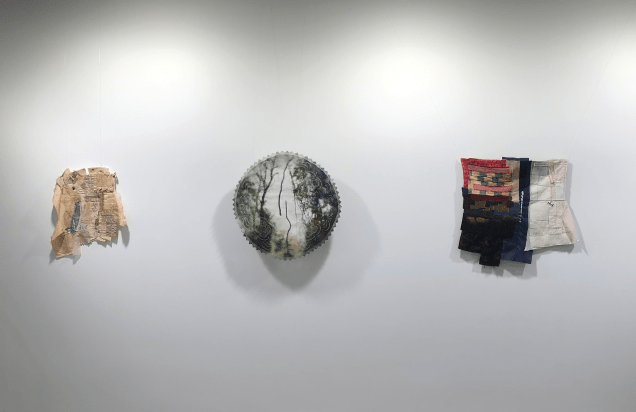
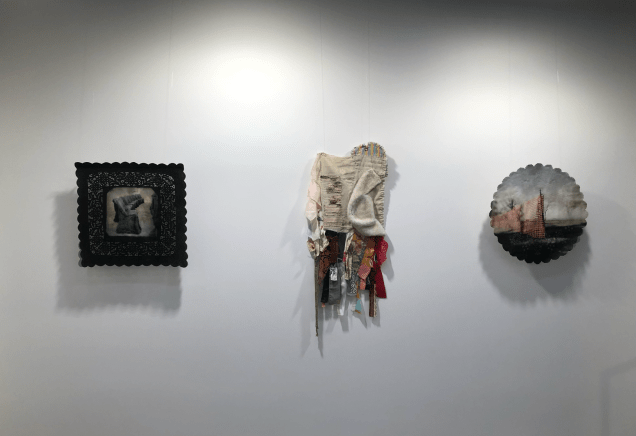
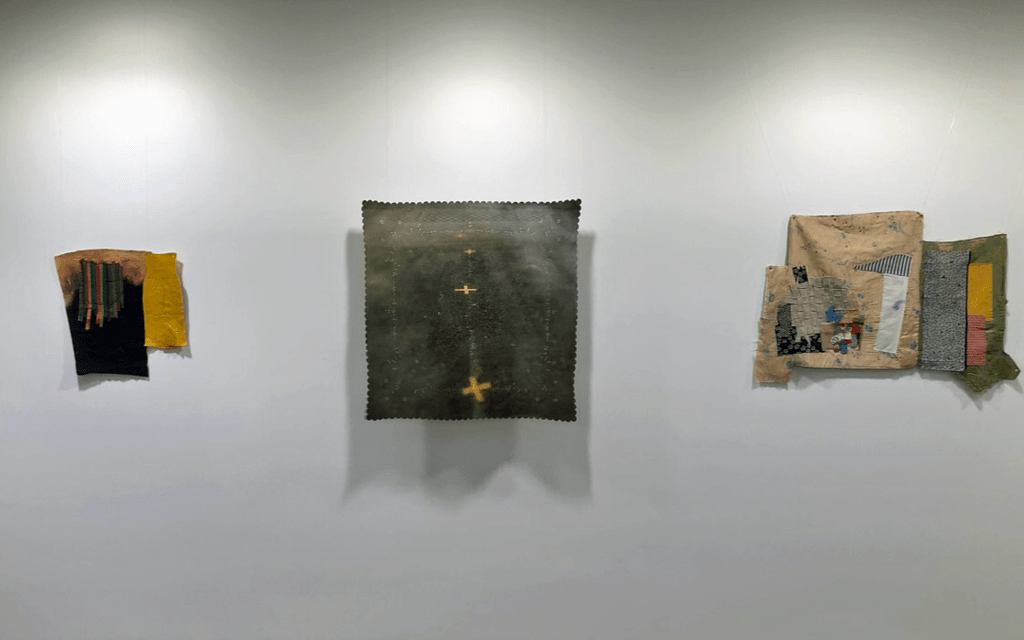
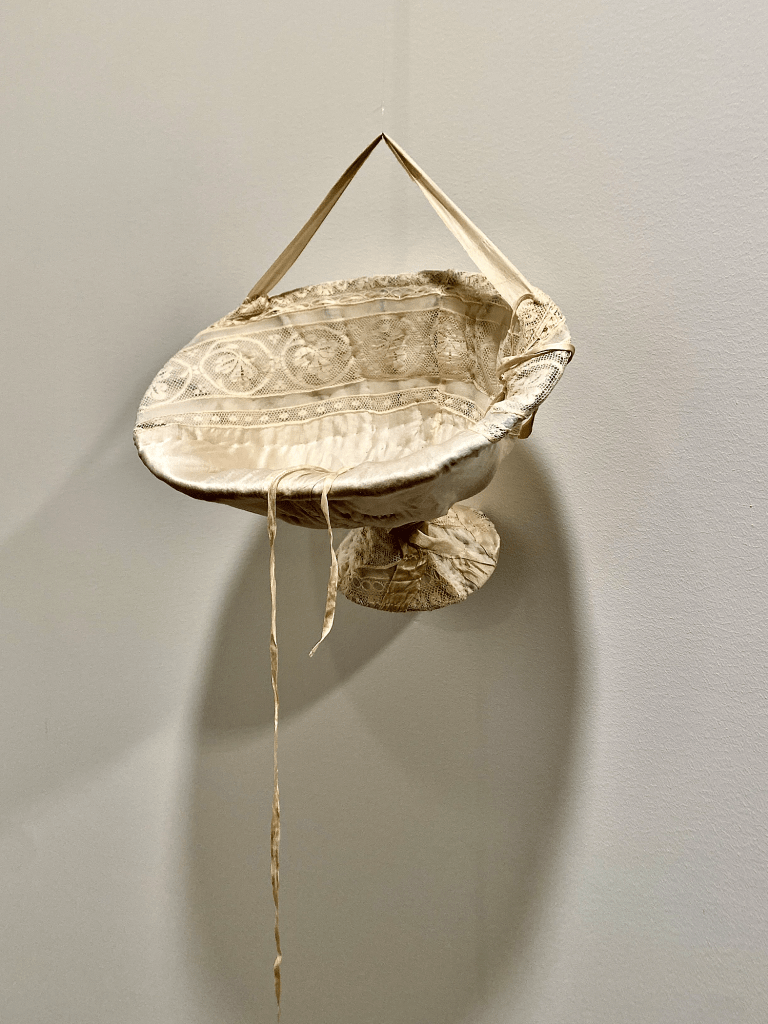
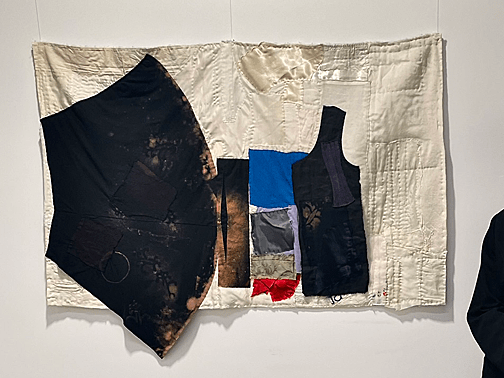
Installation photos here, (mostly) my work:
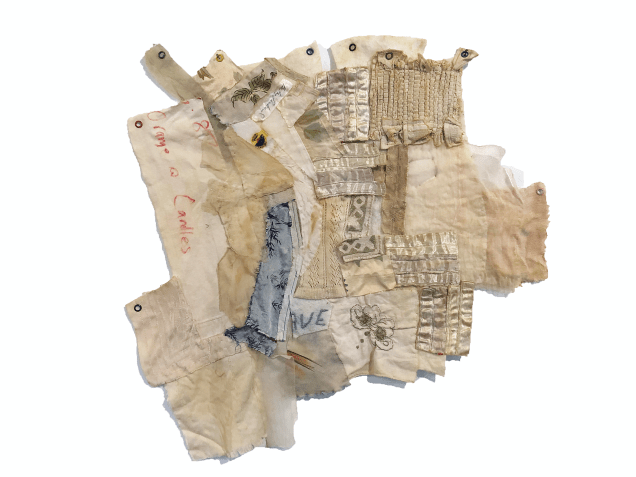
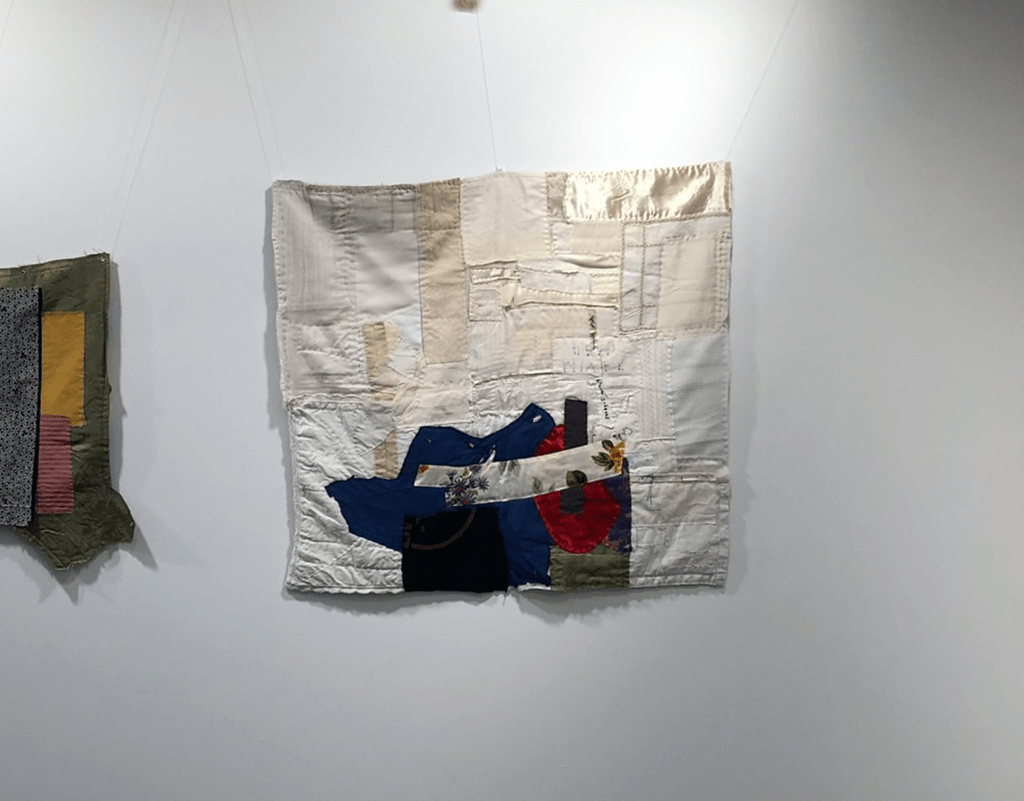
Used fabric and clothing, embroidery, weaving, handsewn. 23”x 21”. Collection of the artist.
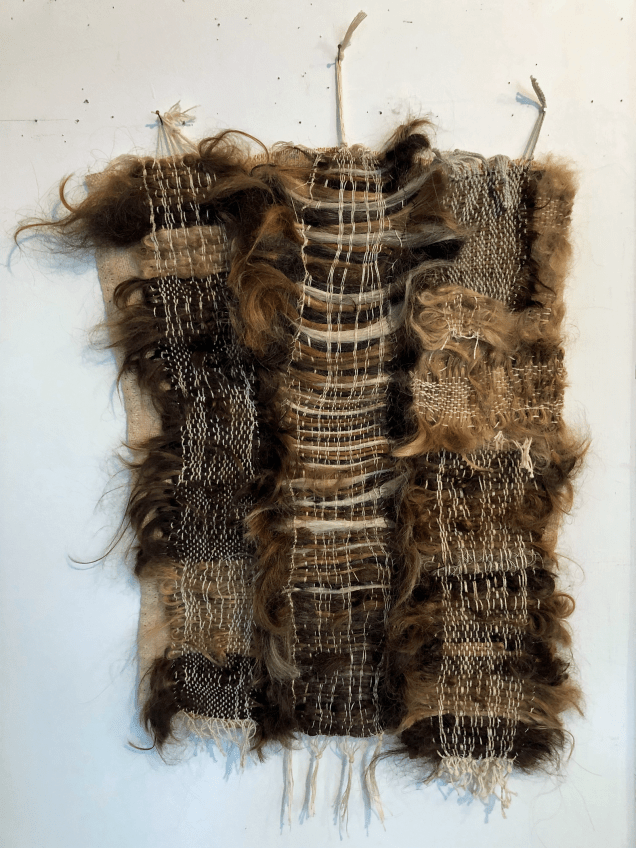
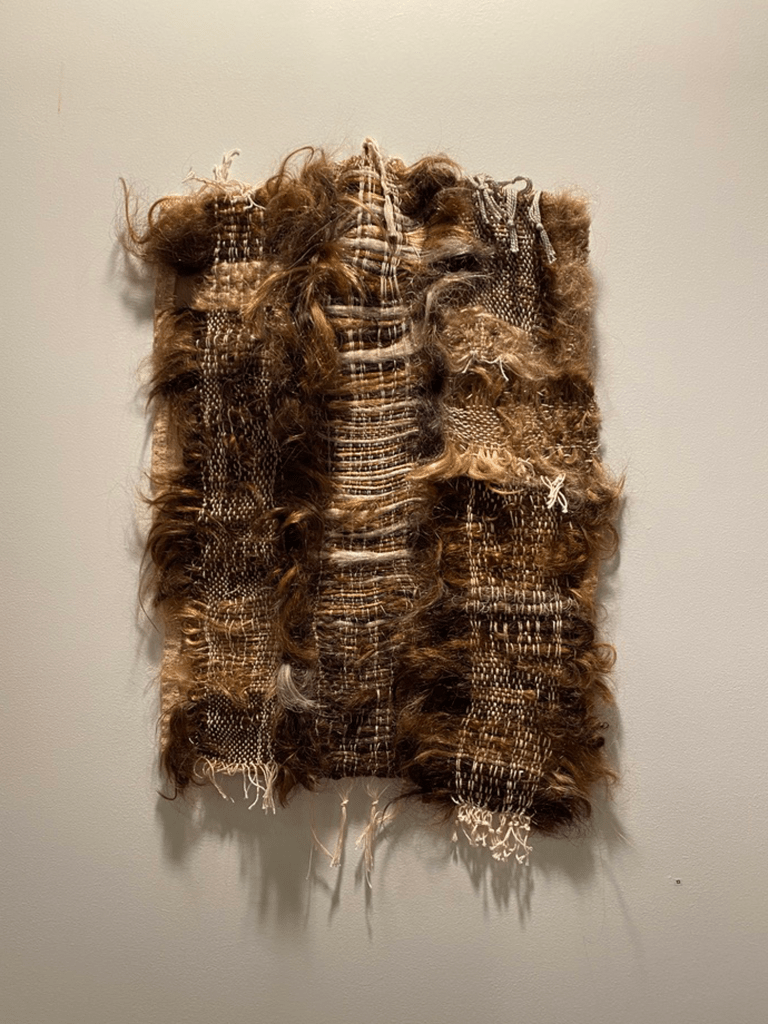
Hair, string, rice bags. 30″x 22″. Collection of the artist.
I finally assembled these last woven fragments that have been in the studio for a long time.
I first used hair in my work in the mid to late 70s. For years, I saved hair from the haircuts I did, and used it in different ways. Galleries were reluctant to show hair work till somewhat later.
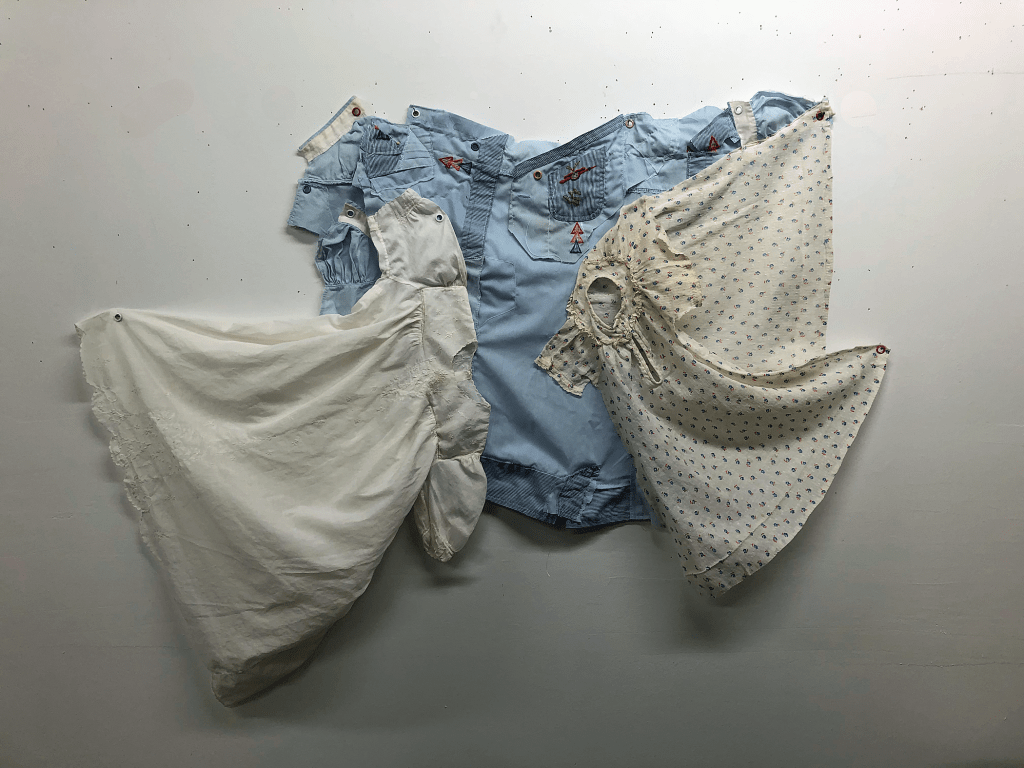
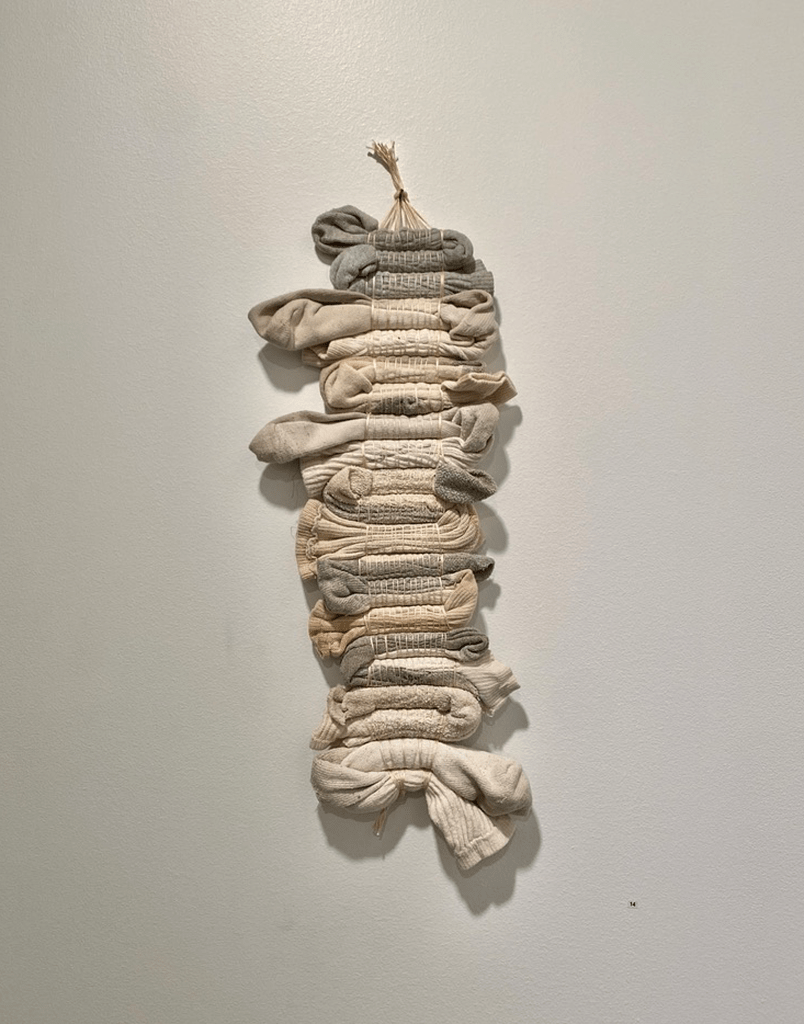
Baby clothes. 38”x 27”. Collection of the artist.
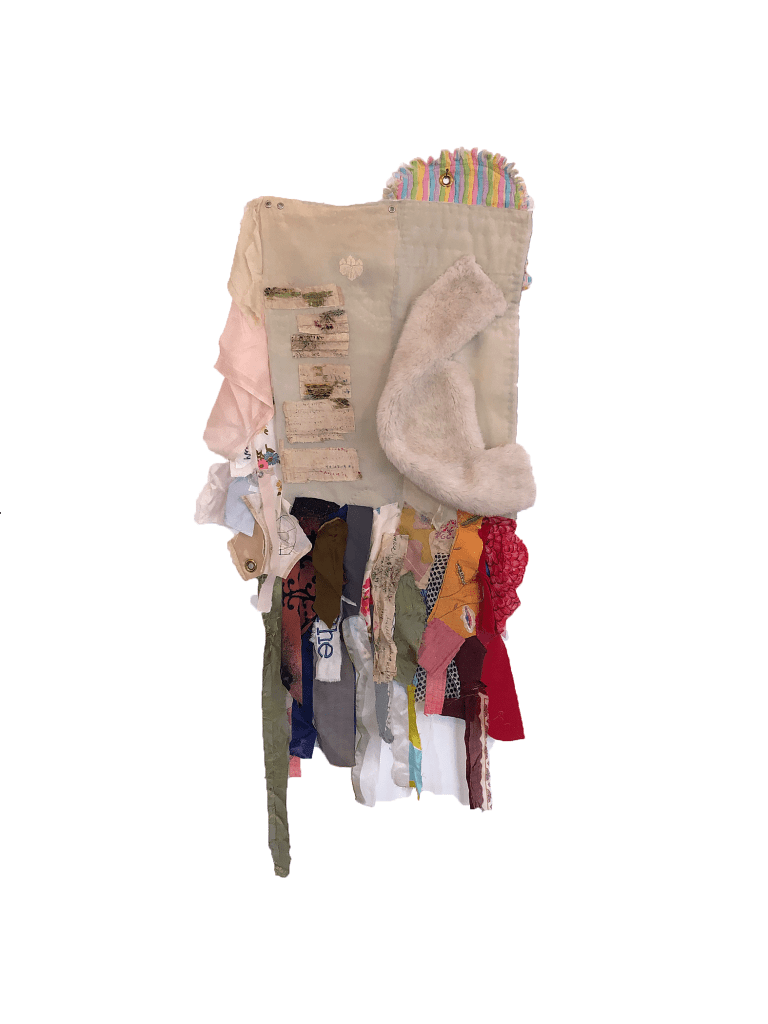
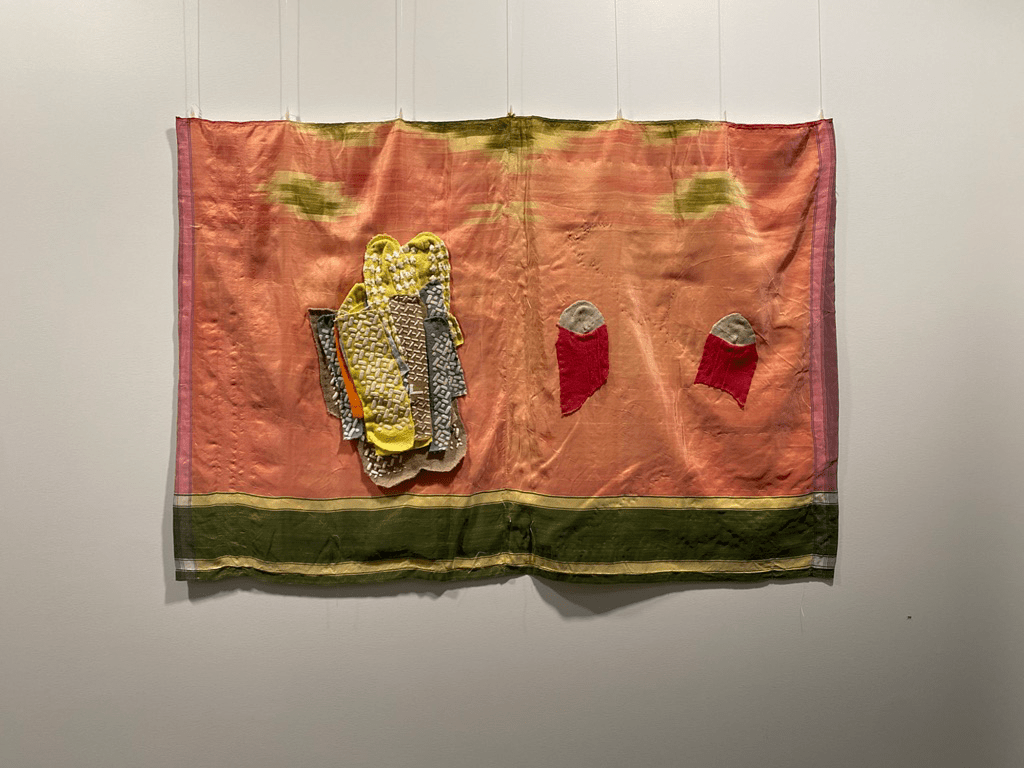
Used fabric, clothing, stencil. 45″x 20″x 4″. Collection of the artist.
Though the works in the exhibition could be studied anthropologically as artifacts of Betsy Packard’s life—a painting that records her casting of the I-ching; tip envelopes and hair samples from her time as a hair dresser; napkins collected as a waitress, processed and cast into the shape of a loaf of bread; her child’s baby teeth replacing the clock face of a wrist watch—the motivations of her artistic practice are not solely autobiographical.
The specific personal stories embedded in her materials may be more or less apparent to the viewer, more or less forgotten by the maker, but nevertheless inform Packard’s visual language—an aesthetic that values the humble, the mundane, and the intimate. Old clothing bearing the owner’s memory has been transformed to reveal the flat shapes of its construction. Egg cartons and plastic product packaging have been used as molds for casting cement and plaster. In lieu of more traditional materials such as paint or stone, Packard uses these quotidian keepsakes and detritus equally to play with form, shape, color, and texture.
The works in this exhibition, the earliest from 1978 (.1315 Bread), the most recent made this year (.1356 untitled), stem from a lifetime of carefully noting the possibilities of our everyday material surroundings. Consistent across the work is a conscious and emphatic thriftiness and a grittiness of both content and surface that rejects the common obsession with sleek, shiny, and new in our consumer culture; instead, Packard rejoices in materials that show permeability and wear, and attest to the ephemerality of our lives.
-Hannah Barco, Curator
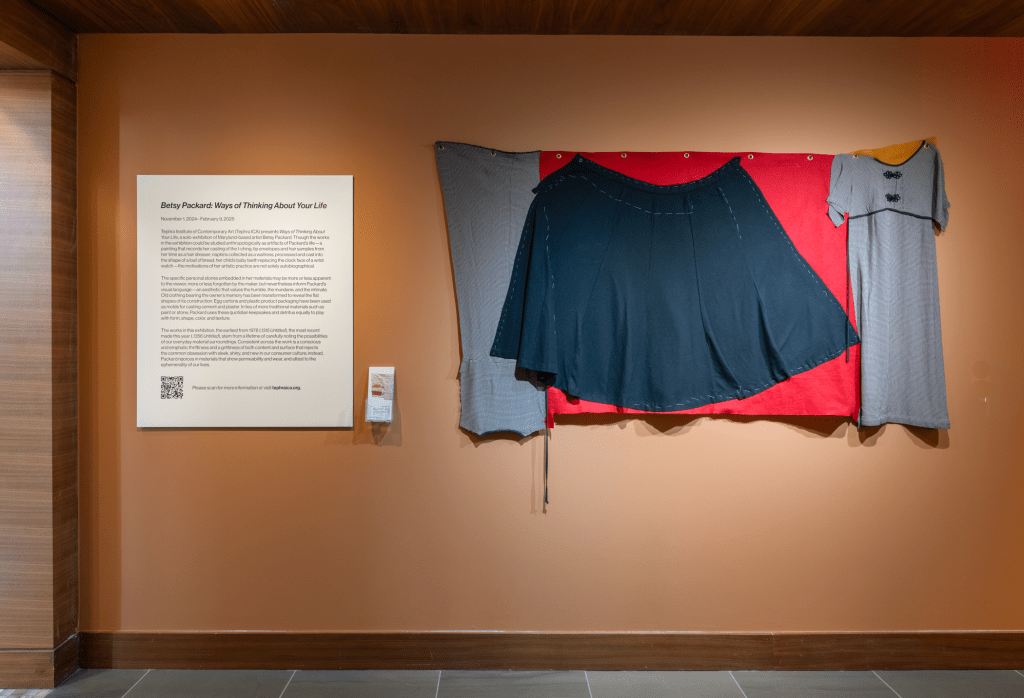
.0486 Mural 2015 80″x 50″. used clothing and felt, handsewn
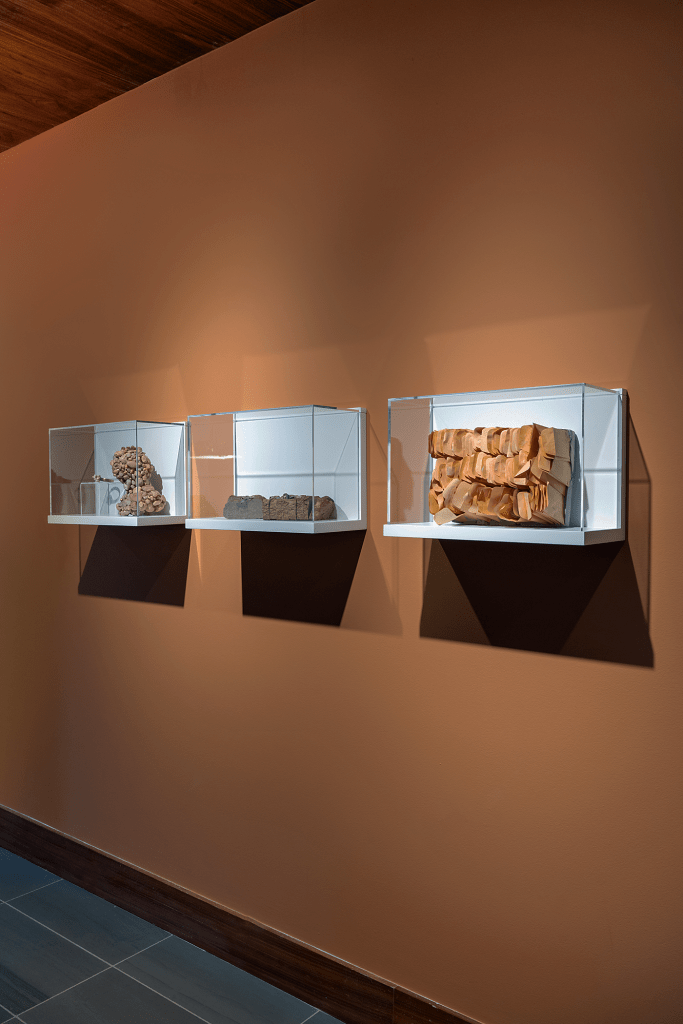
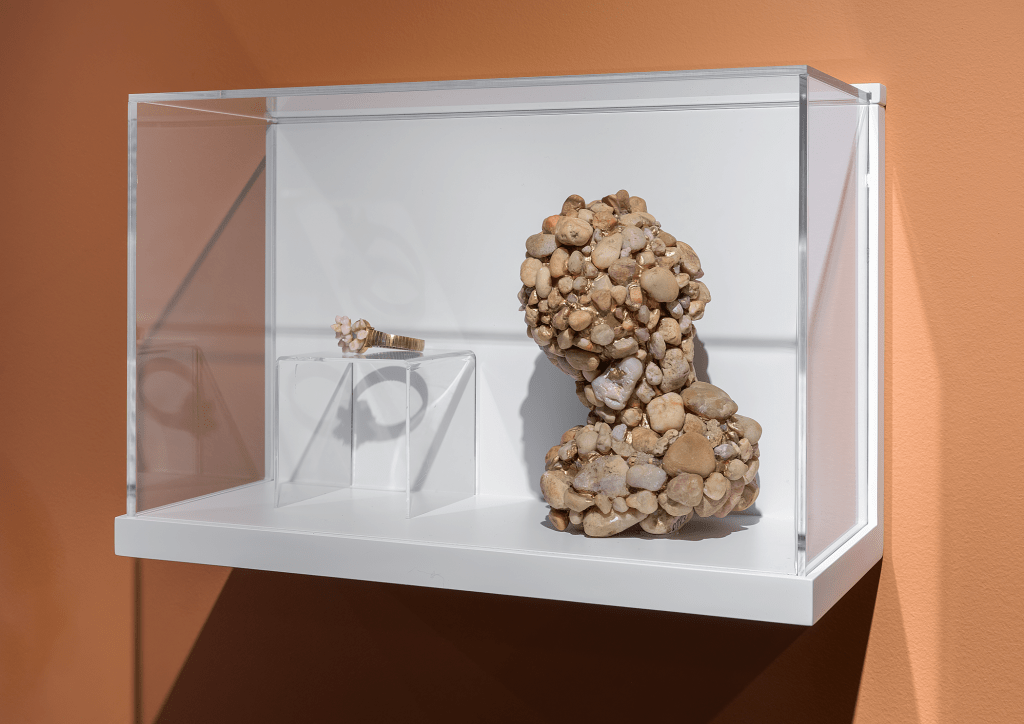
.1145 Your Baby Teeth. 1980s-90s. teeth in watch. .0773 Bust of Oliver Wendell Holmes. date unknown. plaster, rocks, paint.
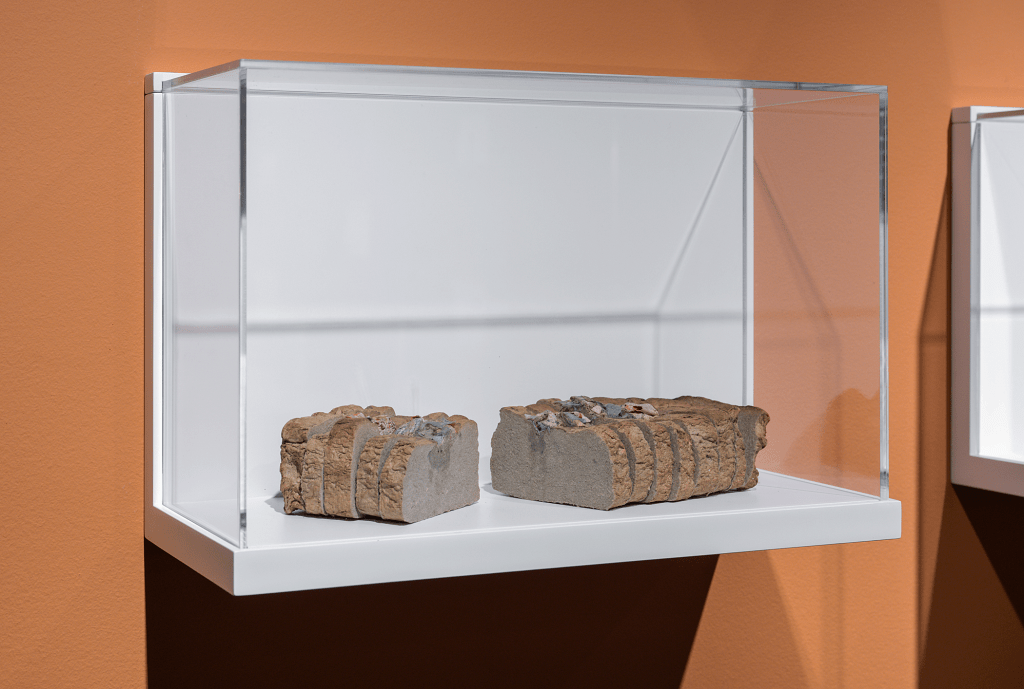
.1315 1978. newspaper, fabric. 10″x 5″x 2 1/2″
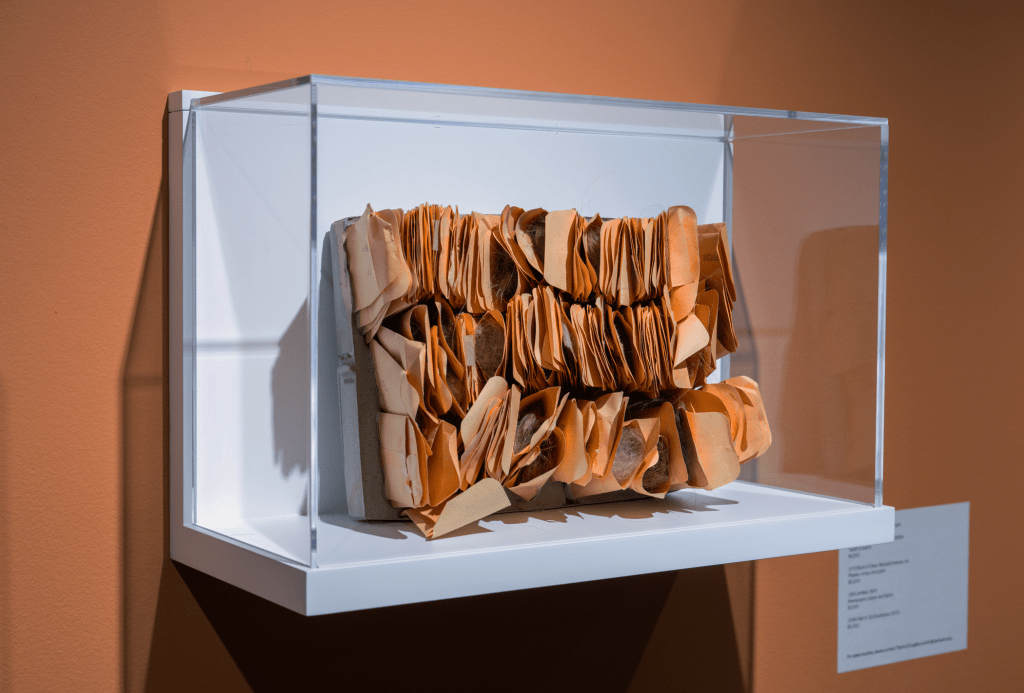
.0084 Hair in Tip Envelopes 2006. 11″x 8″x 5 1/2″

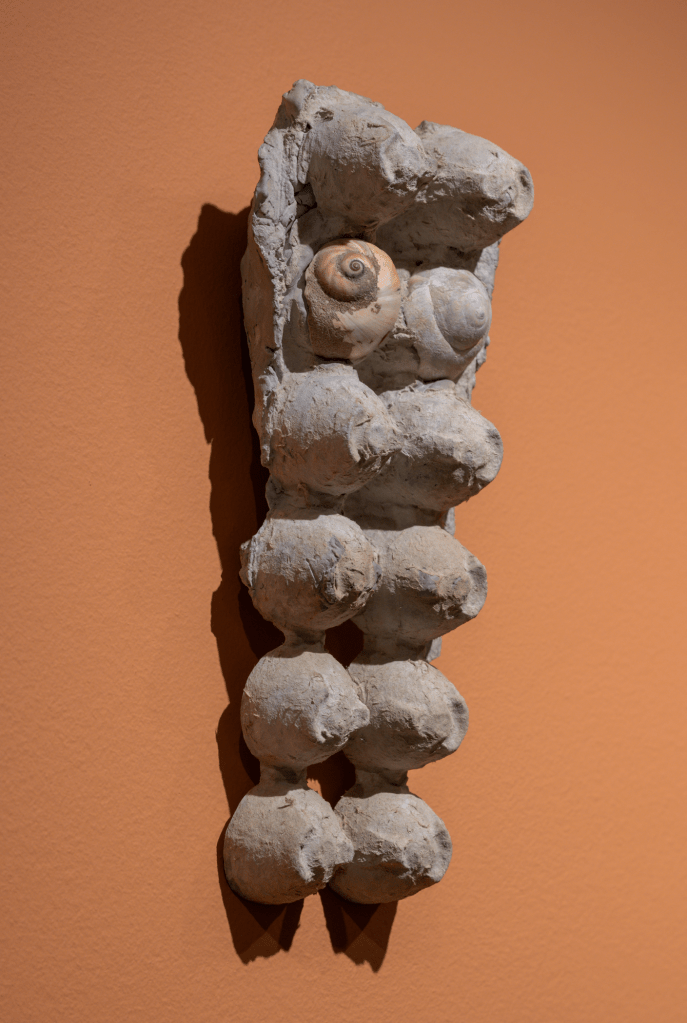
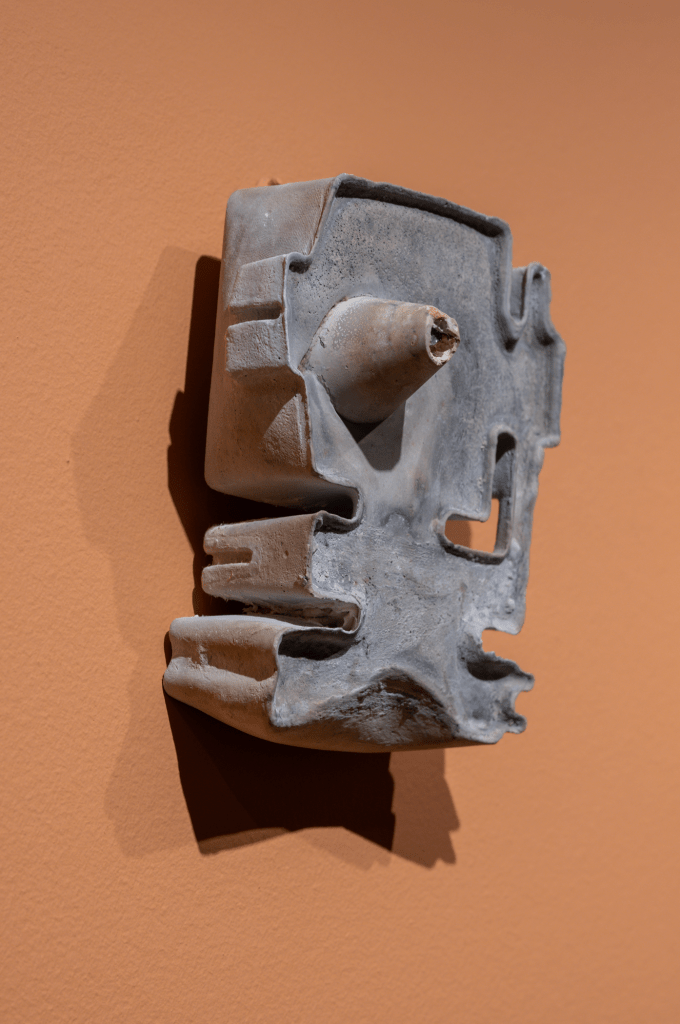
.0069 (eggs and shells) 2004. shells, cement. 11 3/4″x 4 3/4″x 3 1/4″ .0449 Cement and Glass 2005. 7″x 6″x 4″
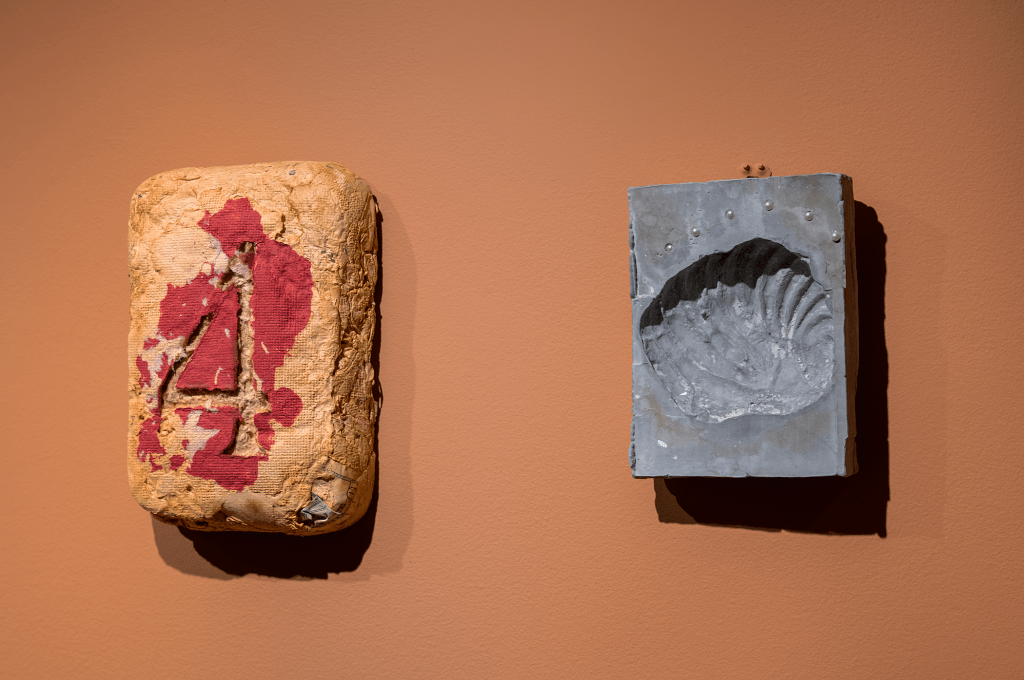
.0025 Abundance 2006. tip envelopes, red paper napkins, $10 bill. 11″x 7 3/4″x 3″ .0021 Scallop with Pearls 2006. cement and pearls. 8″x 6″x 2″
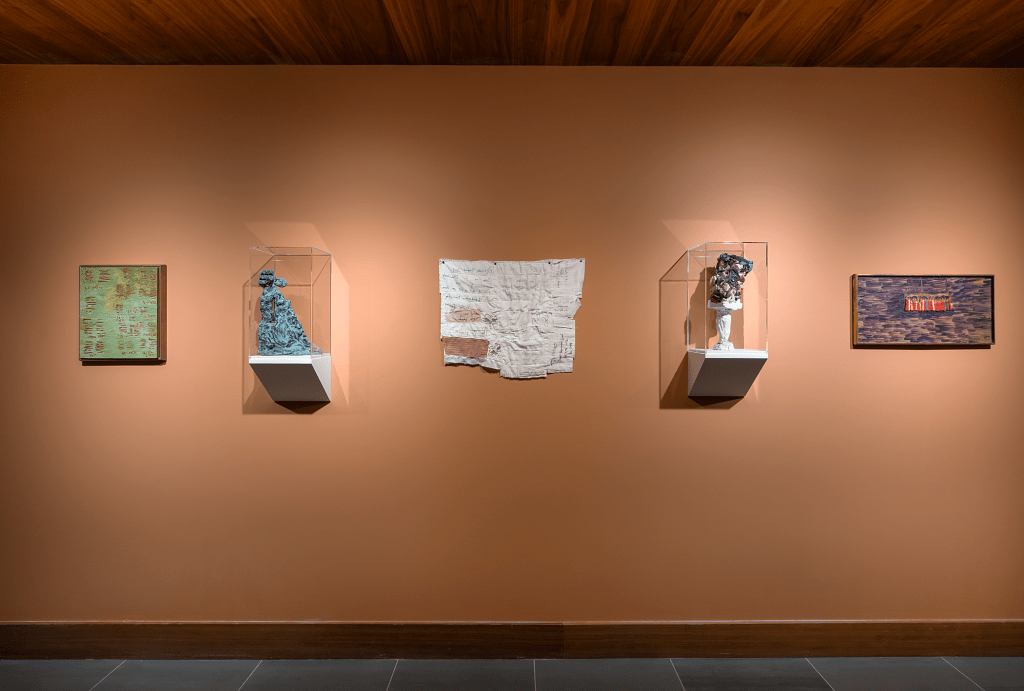
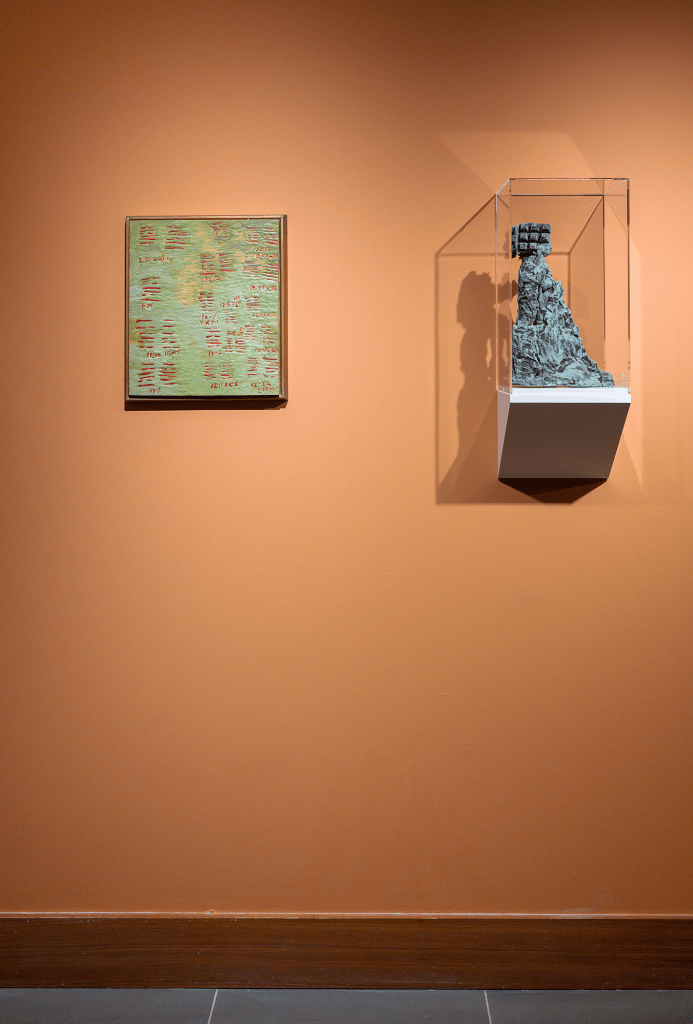
.0024 Advent 1985. wax on wood panel. 15 3/4″x 13 1/2″ .0395 Waffle Figure 1982. painted plaster. 14″x 7 1/2″x 5″
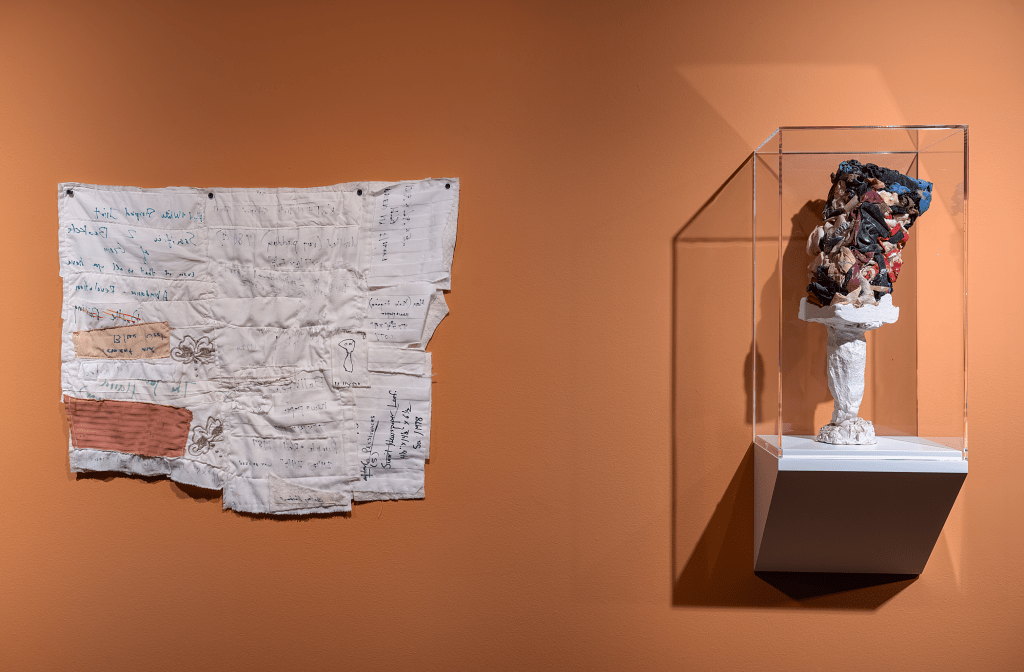
.1359 (record of works) 2024. fabric collage with text. 25 3/4″x 21″ .0794 Compacted Fabric Head 1982. plaster and fabric. 16 1/2″x 6″x 6″
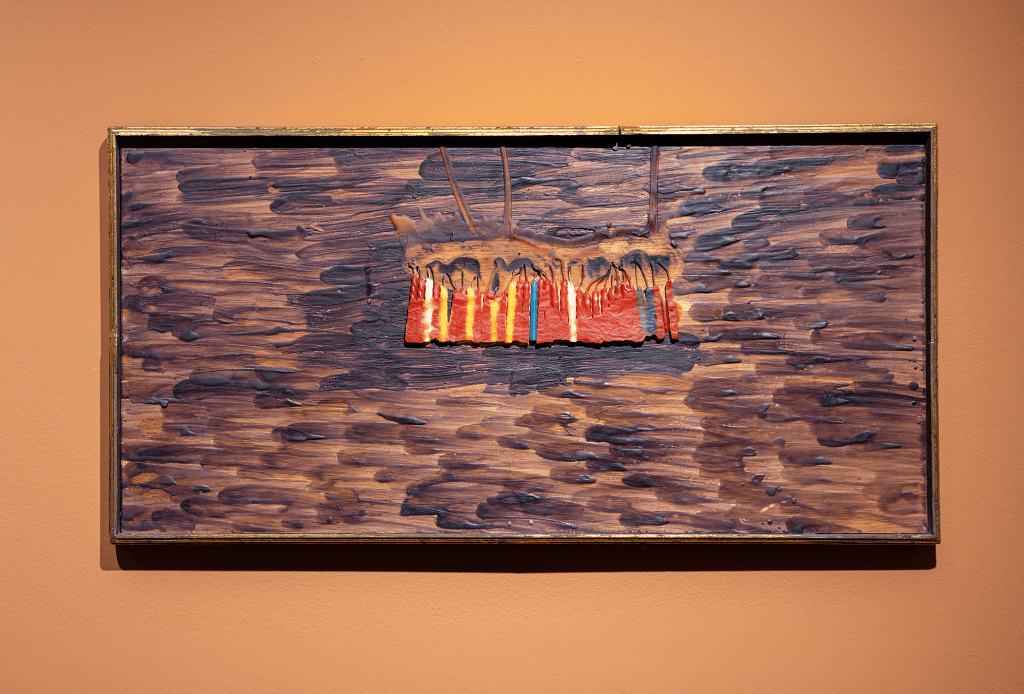
.0349 33rd Year 1986. candles and wax on wood panel. 24″x 12″
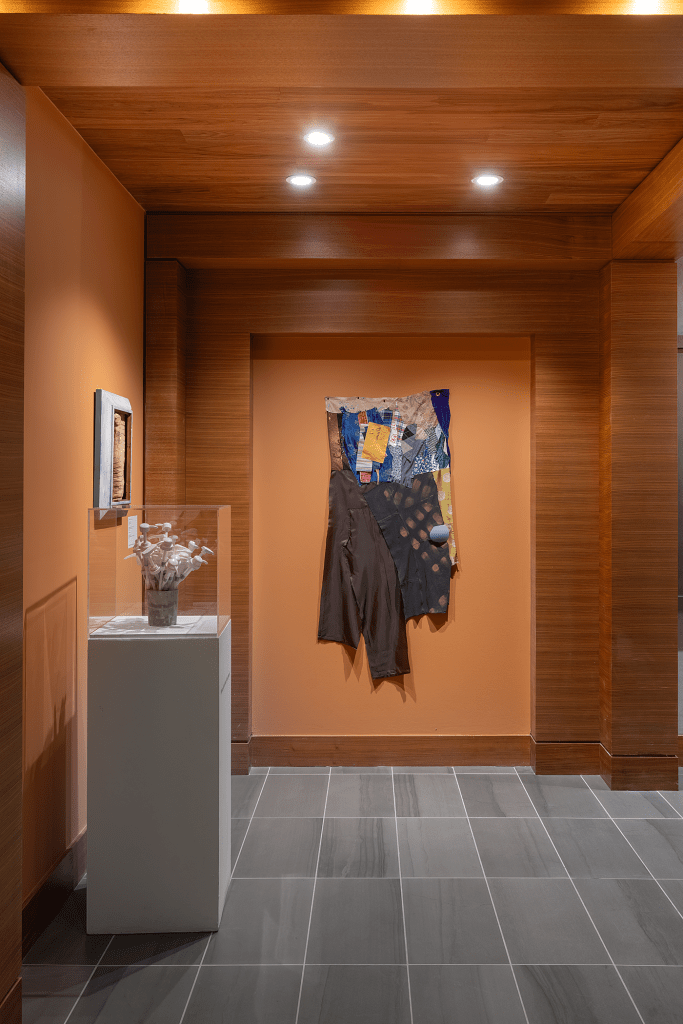
.1356 2024. Stencil and applique with used fabric and clothing. 57″x 28″
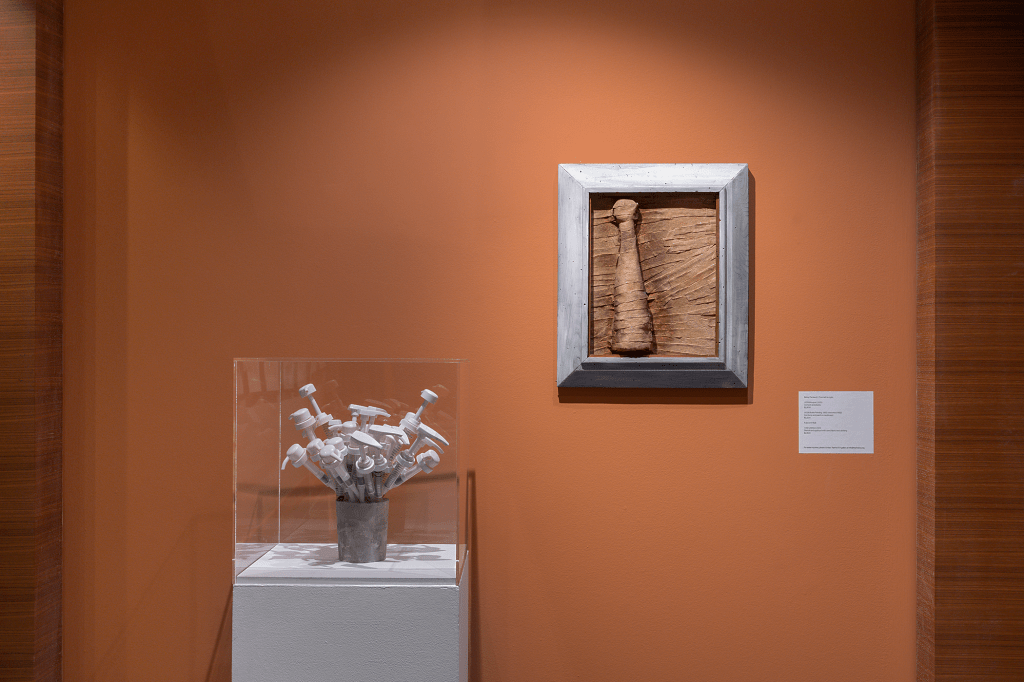
.0619 Bouquet 2003. cement and plastic. 14″x 12 1/2″x 12 1/2″ .0028 Bottle Painting 1982(reworked 1992).corduroy and paint on cardboard. 19″x 17″
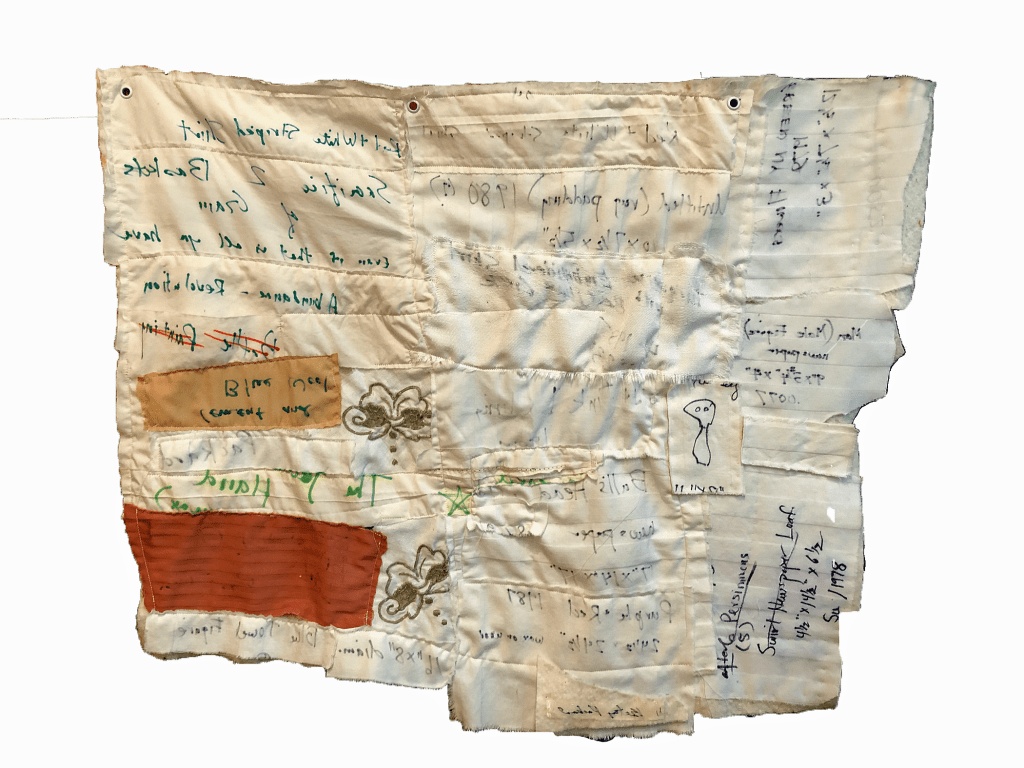
My saved artwork labels collage. 25 3/4”x 21”.
Exhibited in “Ways of Thinking about Your Life,” at Tephra ICA @Signature Gallery, Reston, VA, 2024. Collection of Sofia Blom.
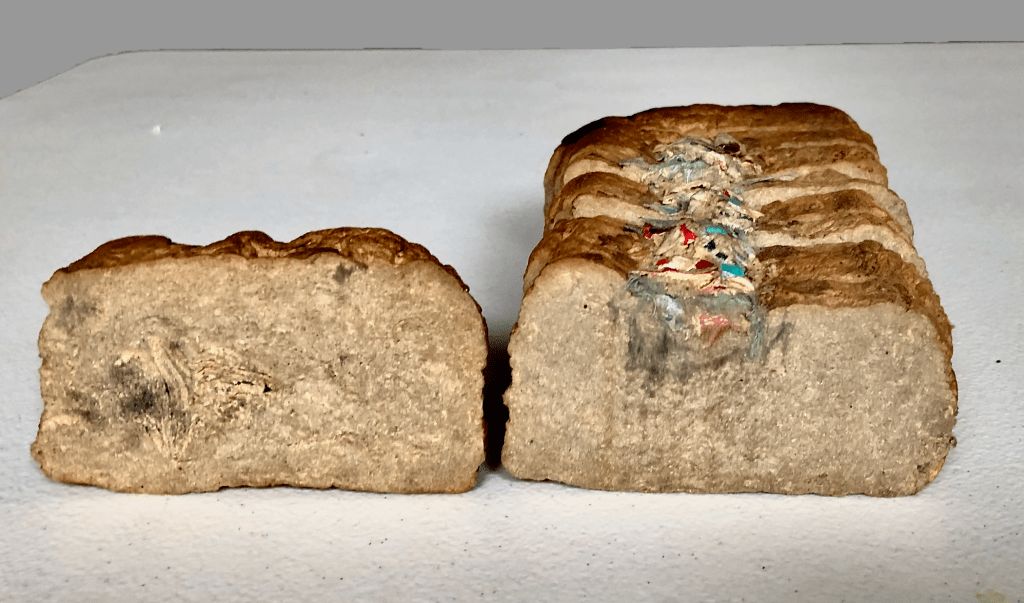
Newspaper, paper, fabric. 10” x5”x 2 1/2”(current size). Collection of the artist.
I’ve posted several of this series earlier, but here is some background: In 1978, I made several of these “loaf like” forms, wanting to make something 3 dimensional rather than a sheet of paper with pulp. Initially I had used special paper as my material–saved notes, letters, ticketstubs, i.e.– paper collage elements. It was a first step in creating a “journal” of physical materials- the personal or specific nature of the contents now a mystery to anyone but myself. I wanted to obscure that personal, sentimental element from the work. Newspaper pulp followed as an abundant, easy source of material for sculpture. First I experimented by adding rolled newspaper or embedding colored paper or fabric in the pulp, and cross-sectioning to reveal the center. My stint as a breakfast waitress at the PSA Hotel San Franciscan exposed me to vast quantities of bread, and an appallingly huge volume of barely used paper napkins, which i stuffed in my bag to take home rather than trash. I made some pulp out of those, poured it into my windowscreen “loaf” mold, and left it outside to dry. It yellowed but was still damp after several cloudy days, so I carefully monitored it in a slow oven, where it turned a golden brown. At the same time I was doing some art modeling at the San Francisco Art Institute, thus was given permission to use their shop and saws. When i cut into that loaf , I continued cutting, because of the amazing texture and uncanny resemblance to bread. Several examples can be viewed in the archive in the PAPER category, as well as years 1978, 1979, 1980, 1981. “Bread” .0319, below:
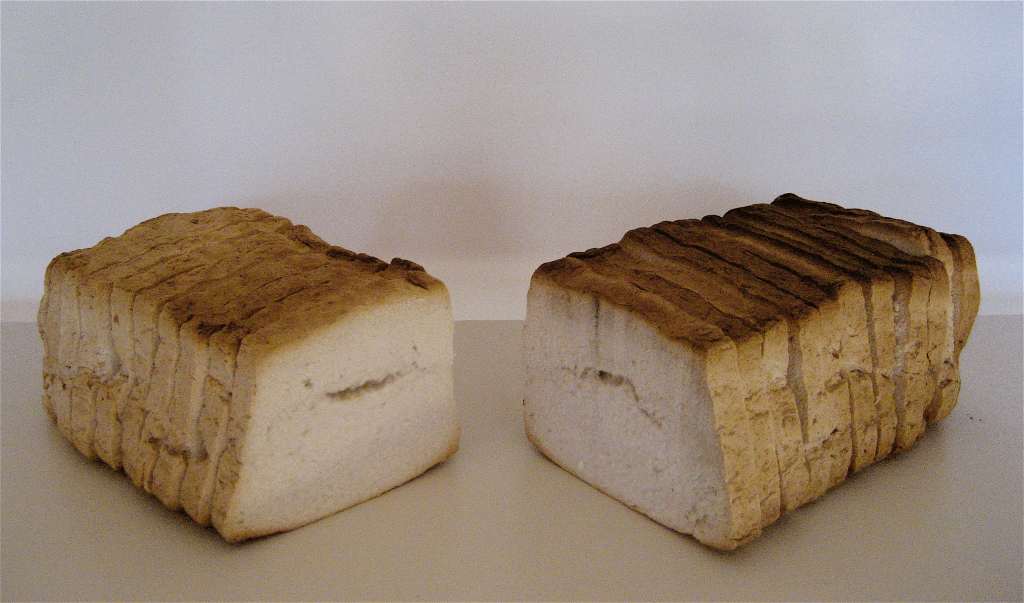
.0319 9/1978

Used clothes. 41″x 33″. Collection of the artist.
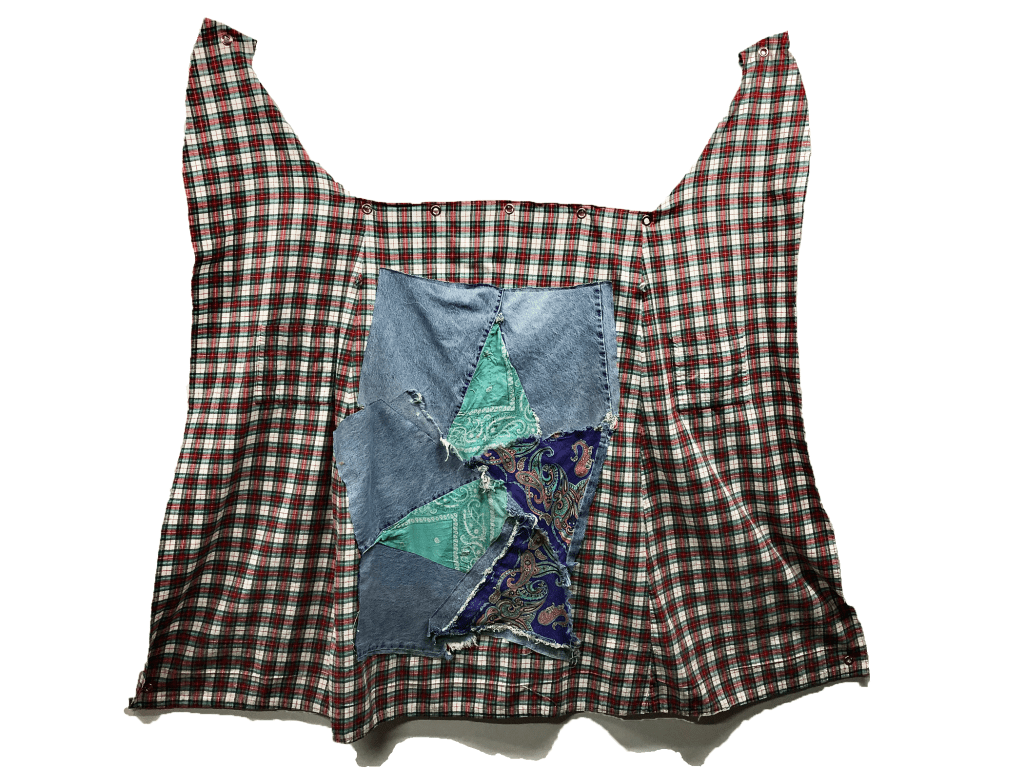
Used clothes. 71″x 55″ approx. (dimension variable on installation). Collection of the artist.

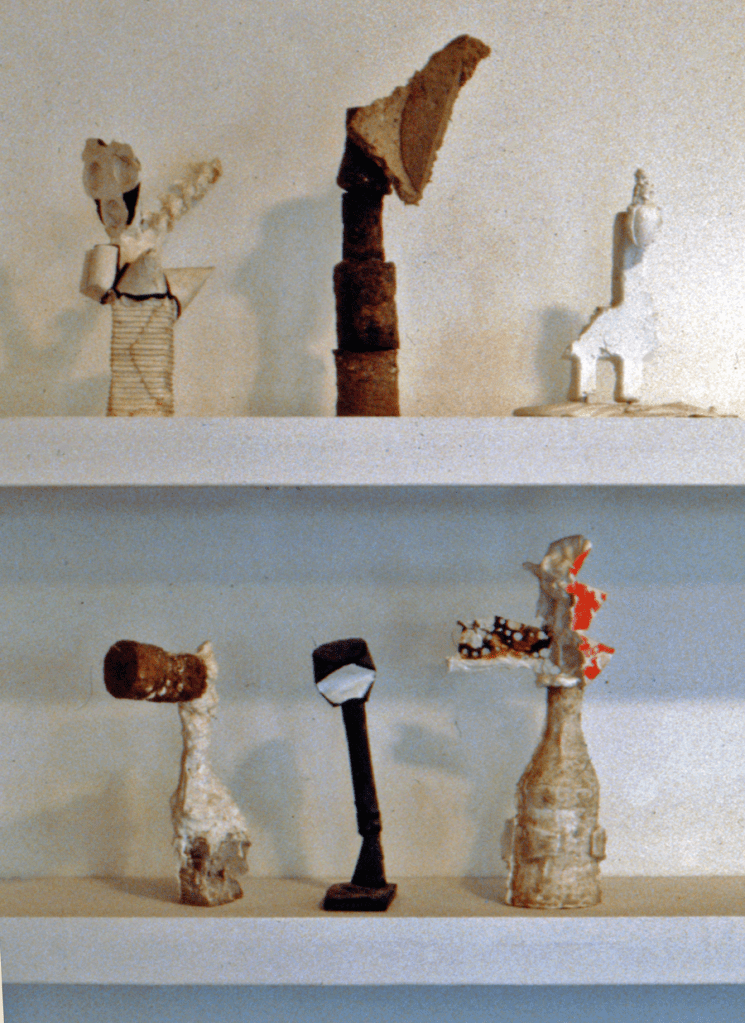
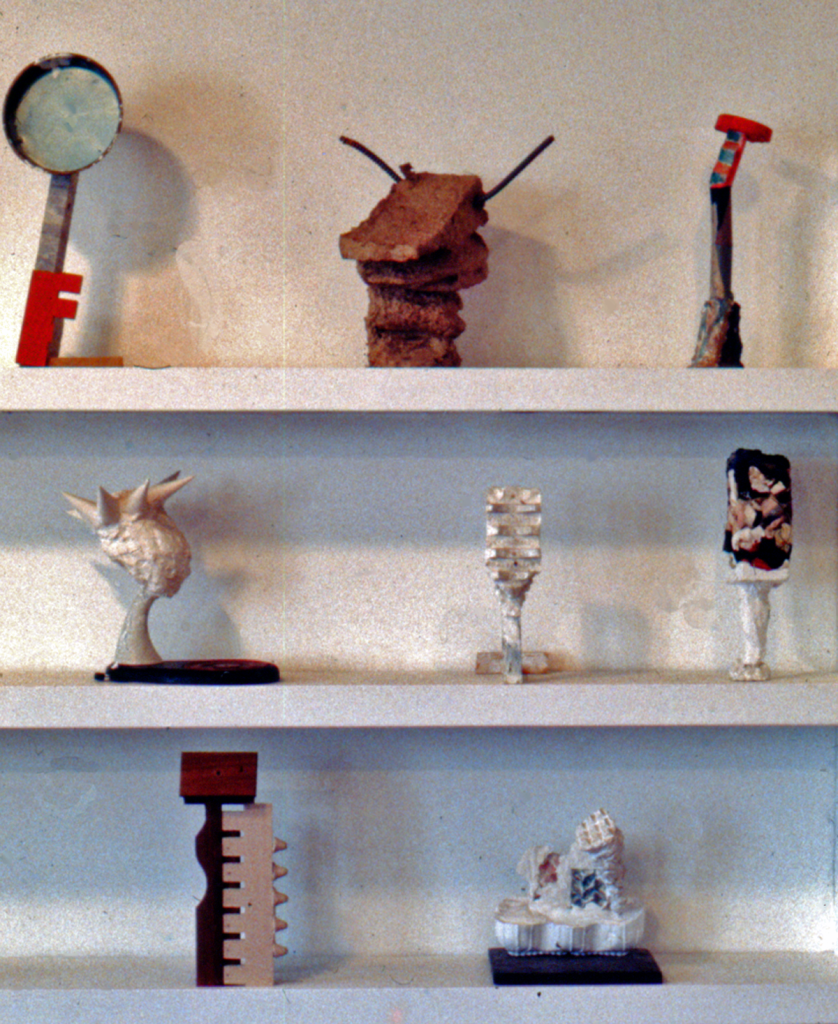

.1226
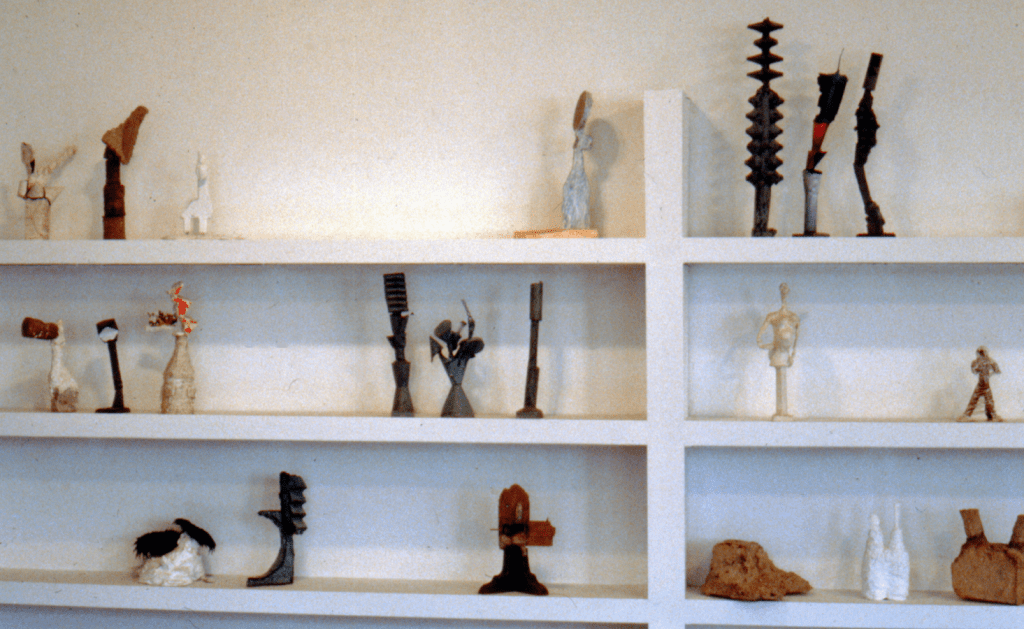
Photos from Packard installation, “Yamaguchi, Spaulding, Packard,” Washington Project for the Arts. Jock Reynolds, Director. Washington, D.C., 1984
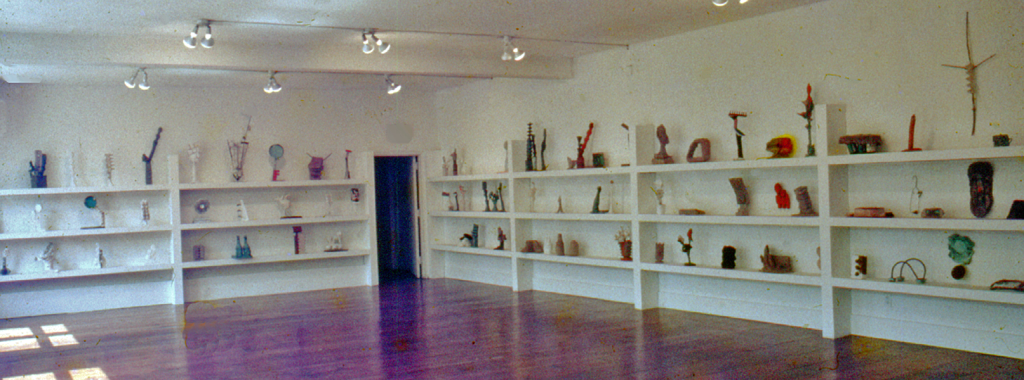
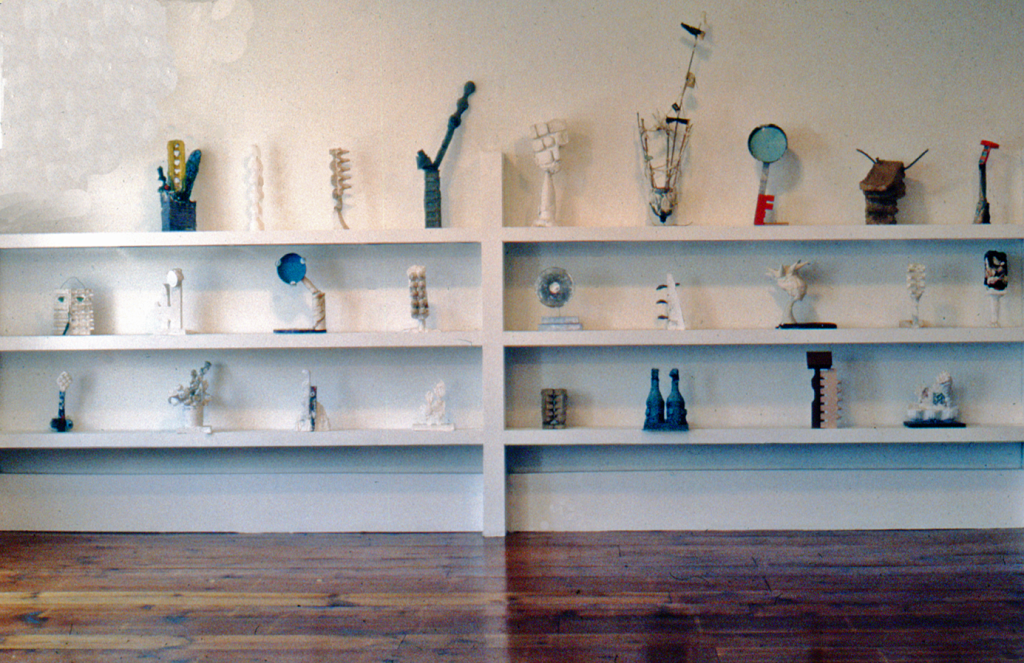
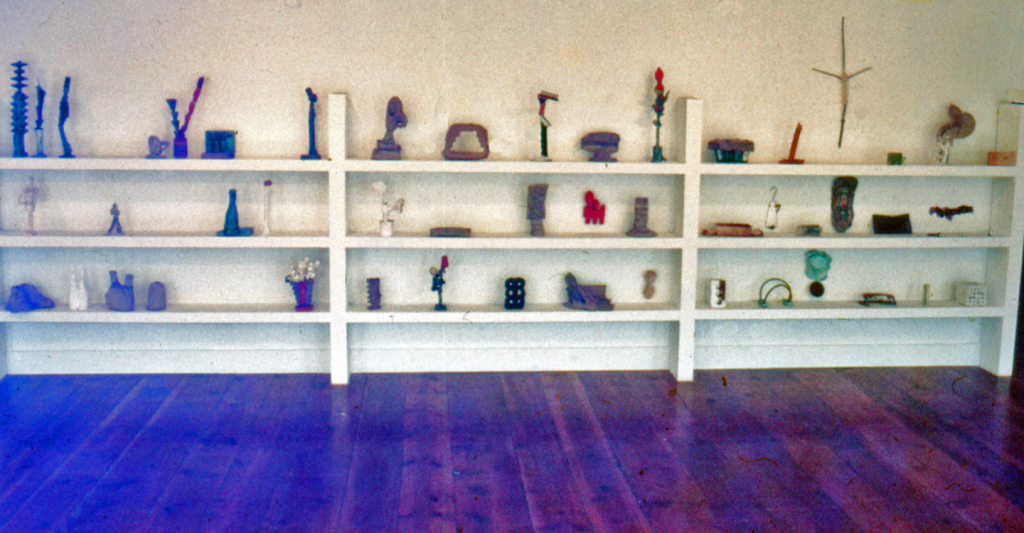
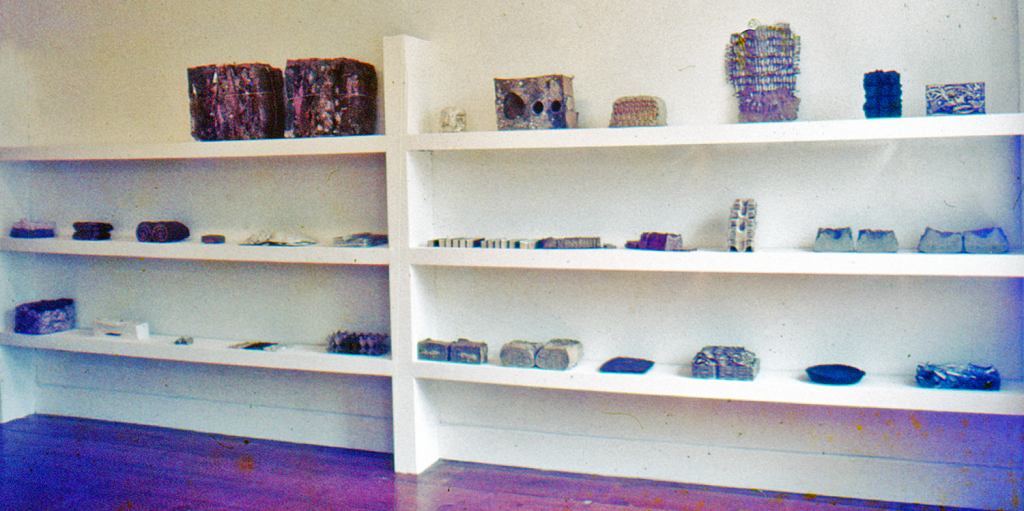
Packard Installation photos. “Yamaguchi, Spaulding, Packard,” at Washington Project for the Arts. Jock Reynolds, Director. 1984, Washington, D.C.
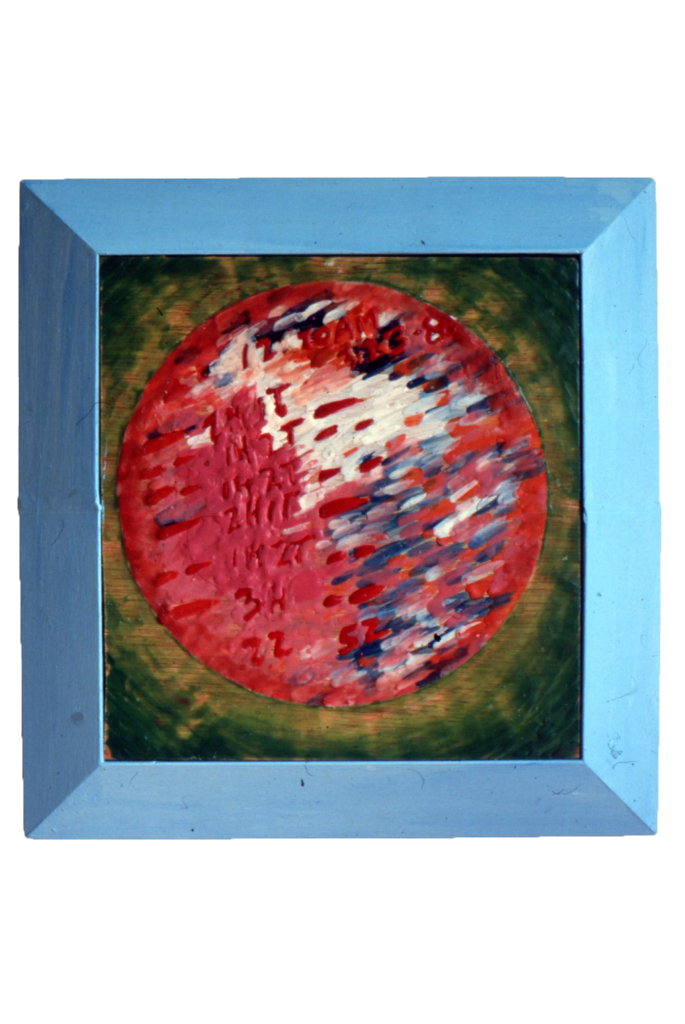
Wax on wood. 16″x 15 1/2″. Non-extant.
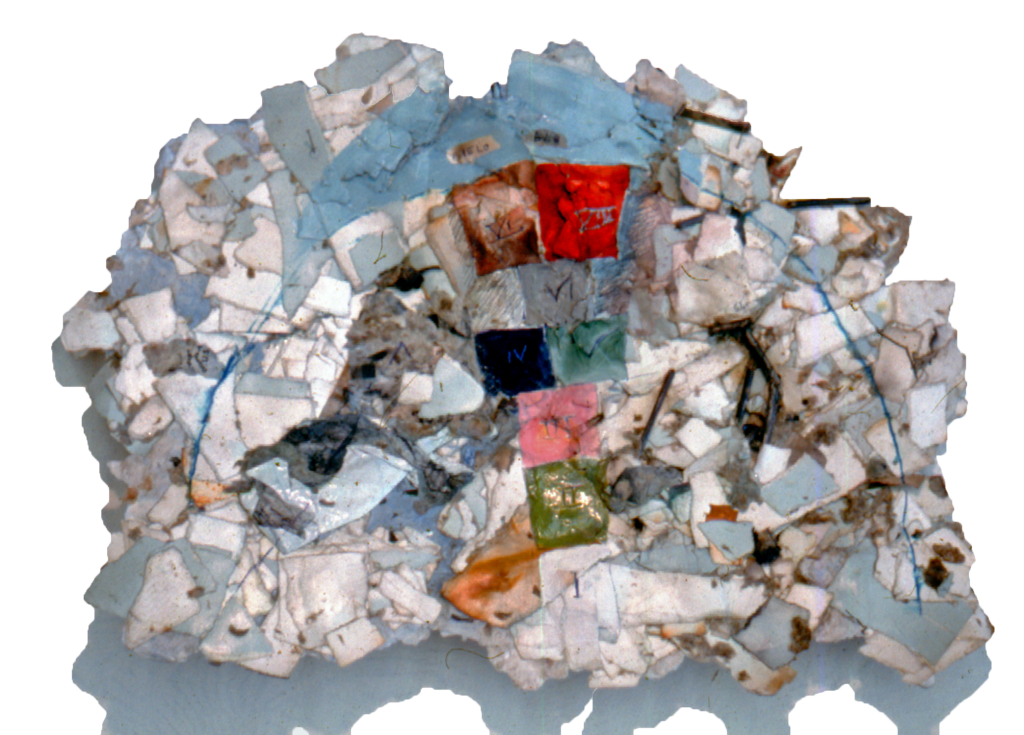
Paper, paint, pen. Collection of Wayne Amedee and Barbara Muniot.
 Betsy Packard Art Archive